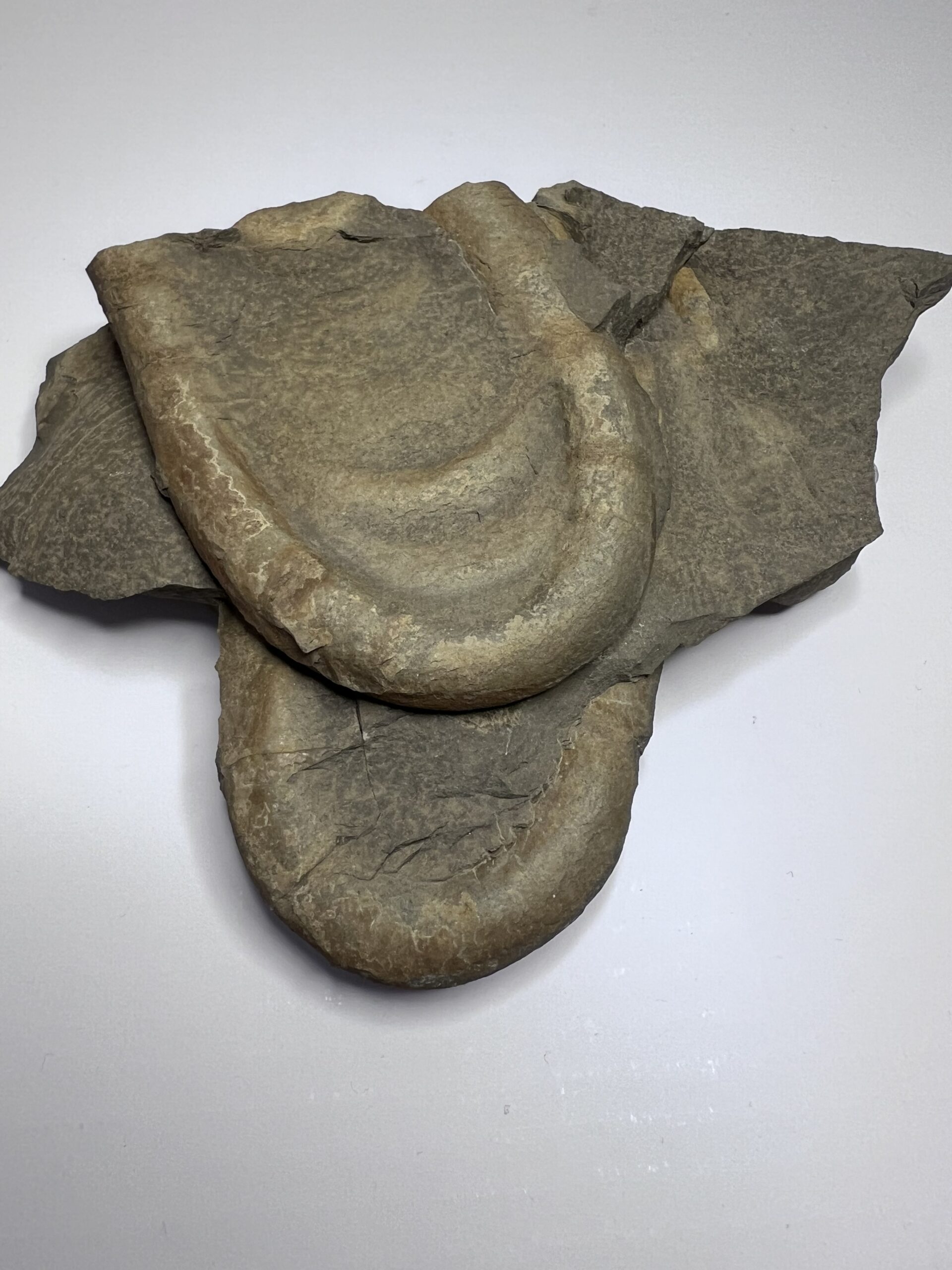


Trace fossils are a special type of fossil that preserve not the bodies of ancient organisms, but the traces they left behind. These include footprints, burrows, feeding marks, bite traces, resting impressions, escape structures, and fossilized droppings (coprolites). Each trace is a direct record of ancient life and behavior.
They form in all environments where life once existed—on land, in rivers and lakes, along coasts, and in the deep sea. Because they are preserved exactly where they were made (in situ), trace fossils provide valuable insight into ancient environments, including water depth, sediment conditions, oxygen levels, and how quickly sediment was deposited.
Trace fossils also reveal behavior, such as movement, feeding, resting, burrowing, and reactions to sudden environmental changes. Although we cannot always identify the exact organism that made a trace, these fossils are especially important in places where body fossils are rare or absent.
In the end, trace fossils are more than marks in stone—they are frozen moments of Earth’s history, quietly recording the presence and activity of life long gone.
Authors: Katarina Kadivec, Doroteja Fon, Matija Križnar