


Fotografije: David Kunc
Fotografija: Tomi Trilar
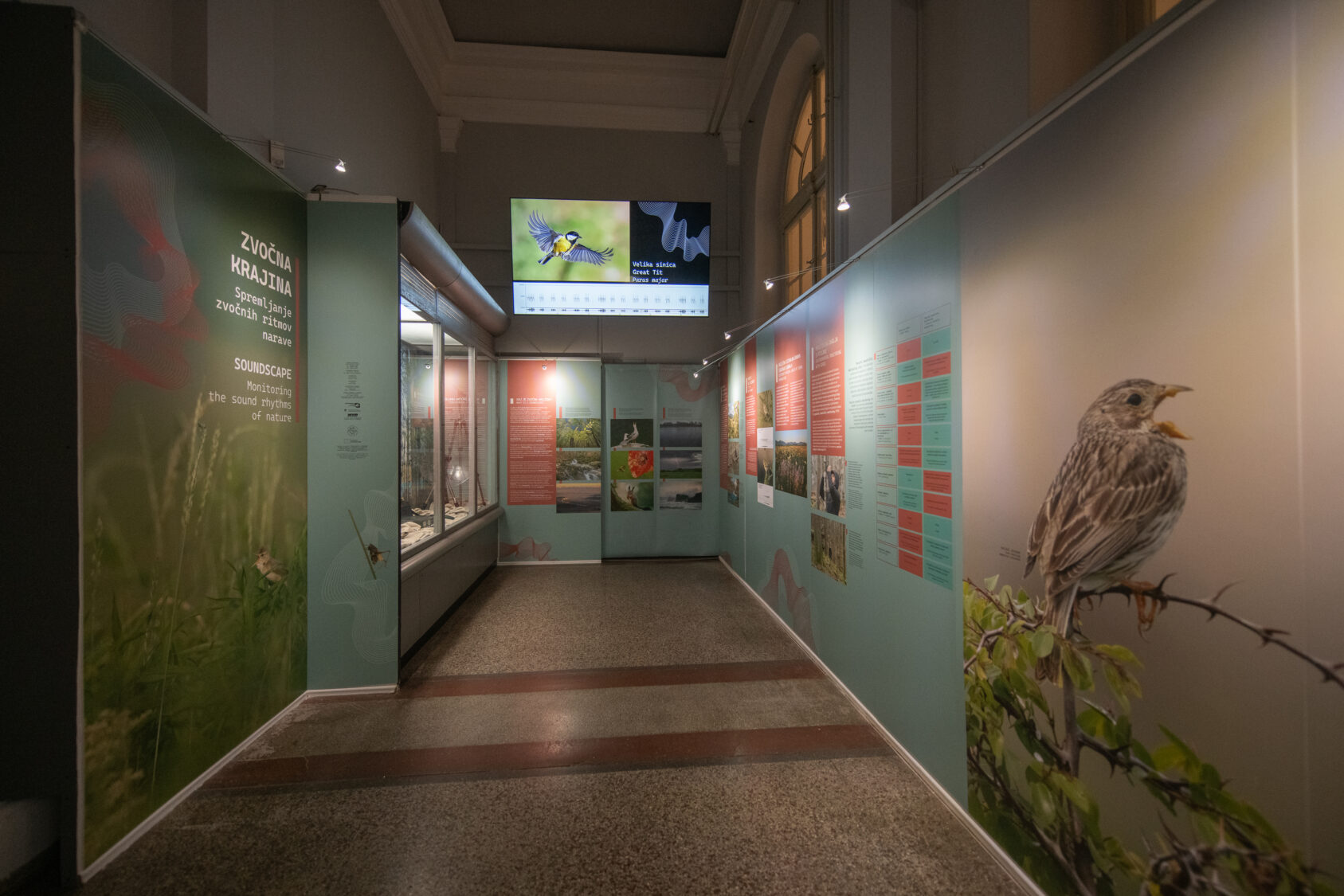
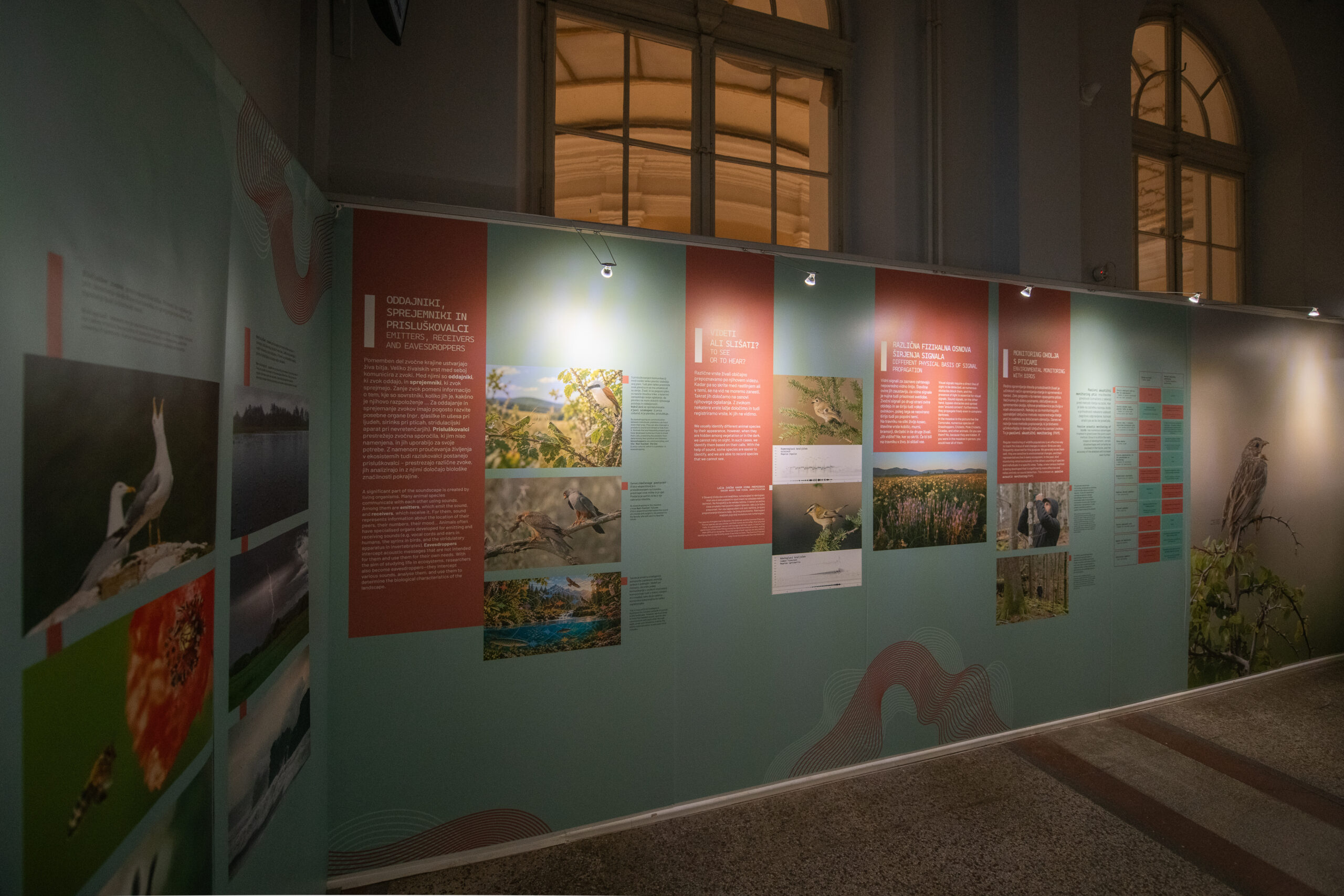
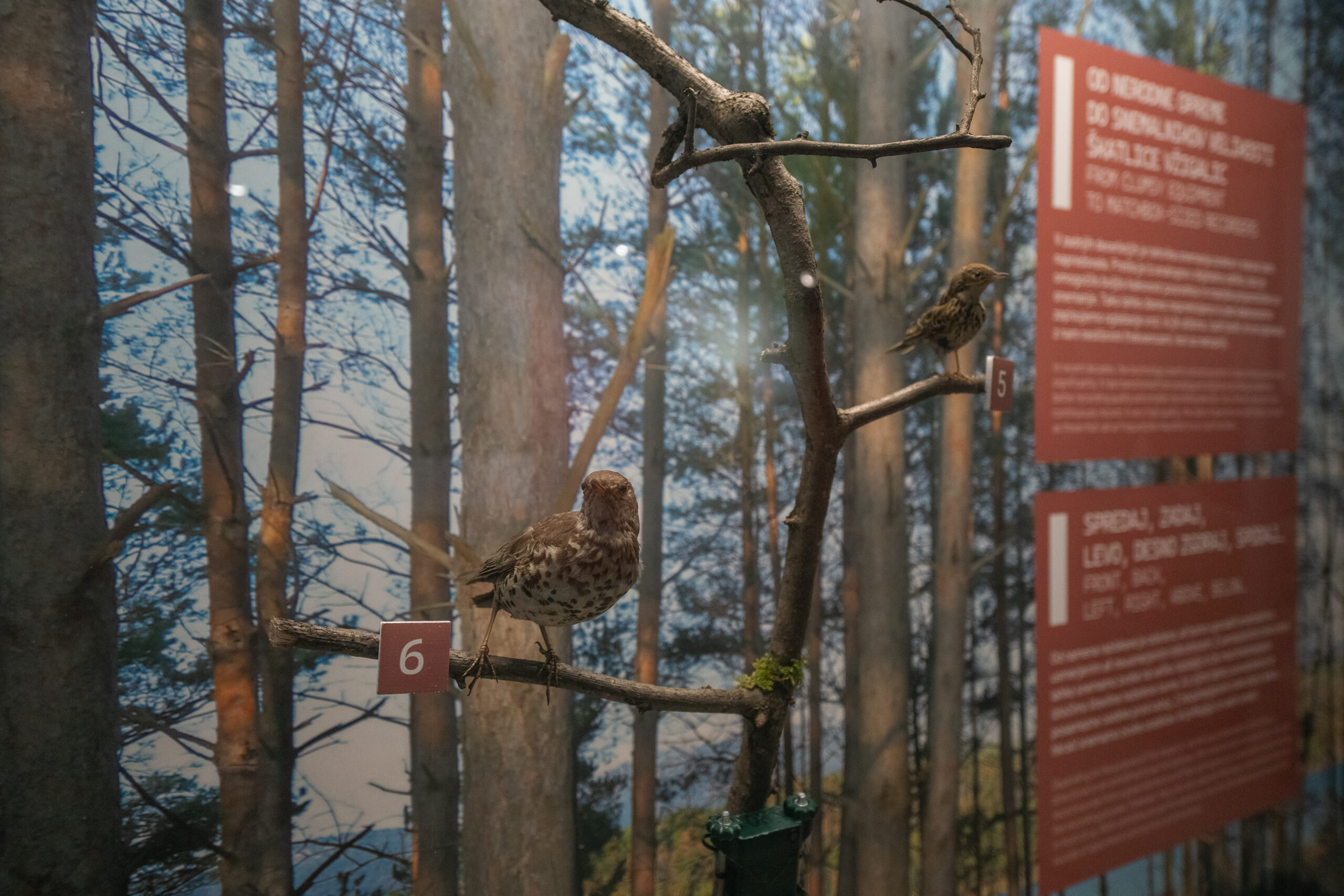
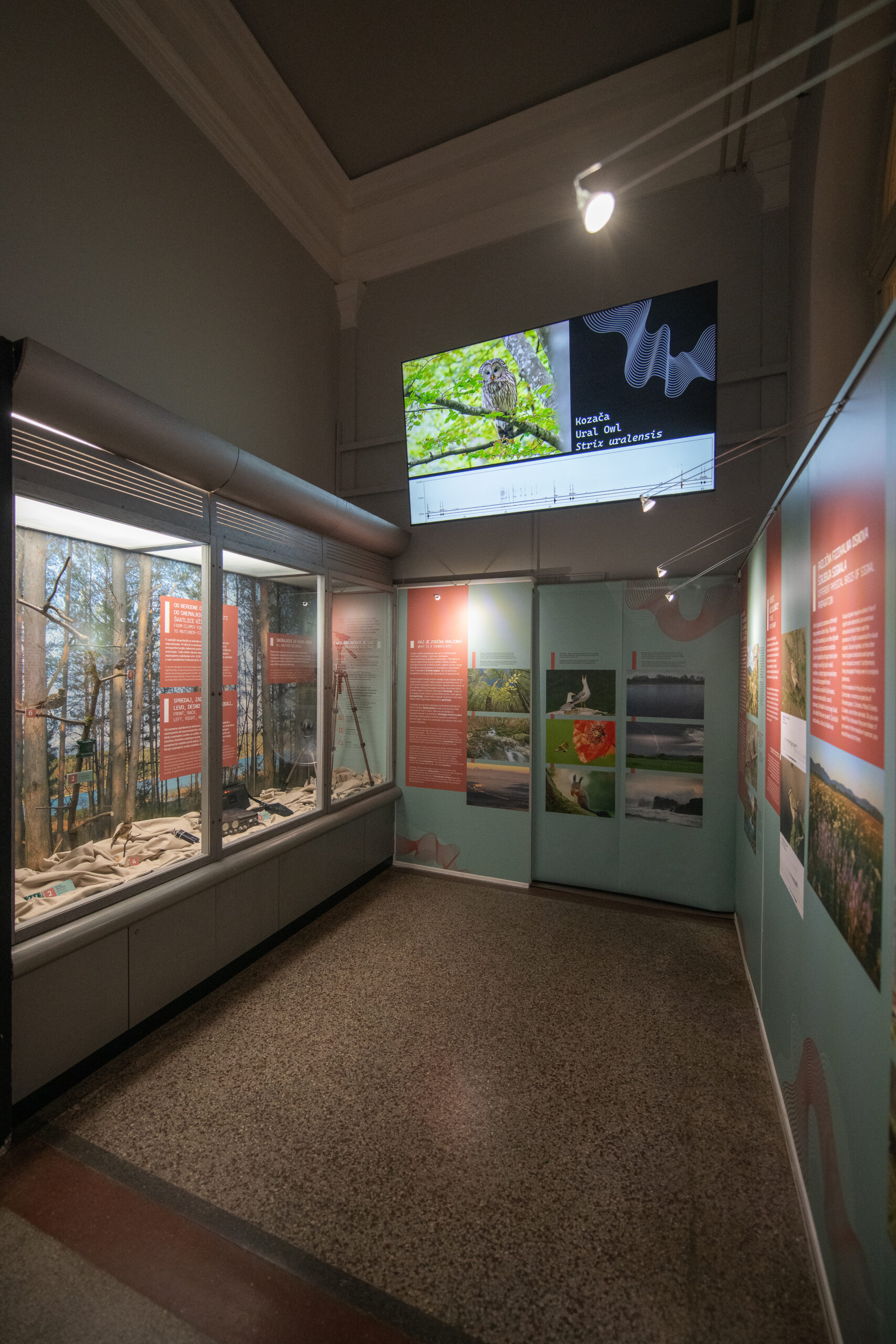
The exhibition opened on 25 September 2026, during EUROPEAN RESEARCHERS’ NIGHT, as part of the Rhythm of Life project. The opening was accompanied by a lecture by Dr Davorin Tome, the exhibition’s lead author. The exhibition explores the purposes and applications of studying sounds in nature, as well as various recording techniques.
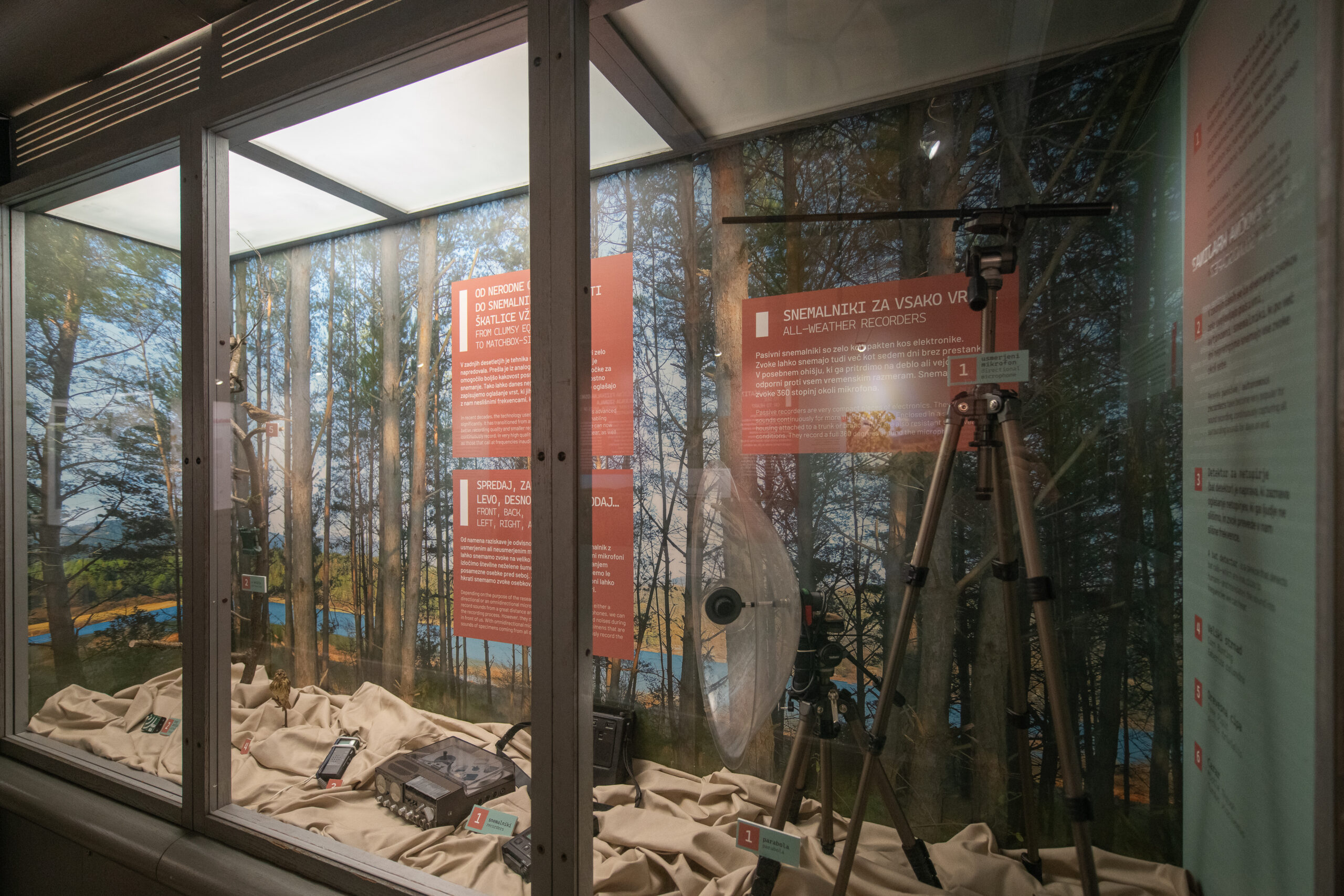
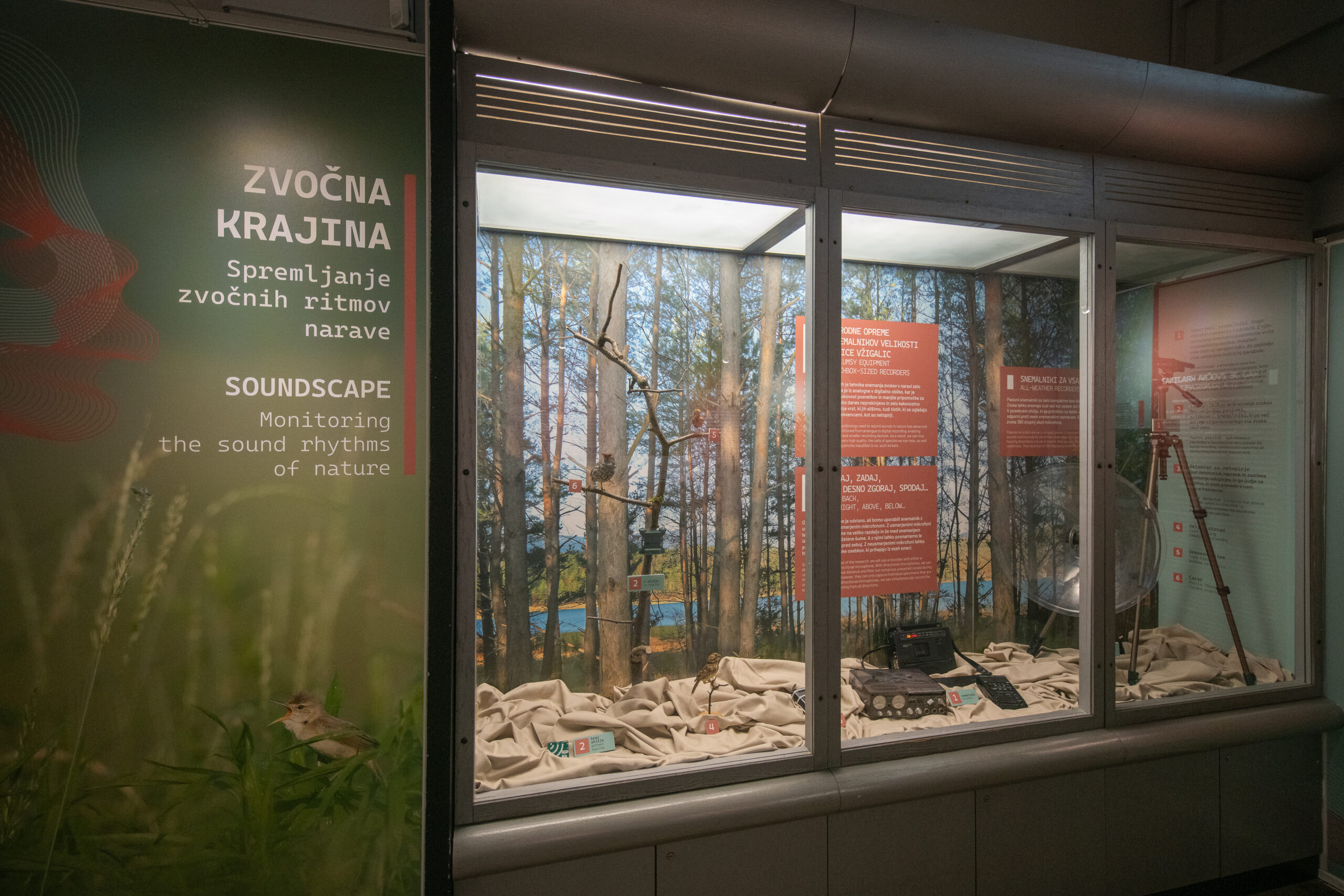
In recent decades, sound recording technology has advanced considerably. The transition from analogue to digital recording has improved sound quality and made recording equipment smaller and more portable. Today, we can continuously record the vocalisations of different species in high quality, including those that produce sounds at frequencies beyond the range of human hearing, such as bats.
The choice between a directional and an omnidirectional microphone depends on the purpose of the research. Directional microphones allow us to record sounds from considerable distances while filtering out much of the unwanted background noise during recording. However, they are primarily suited to recording individual animals within a specific direction. Omnidirectional microphones, on the other hand, can simultaneously capture sounds produced by animals in all directions.
Passive acoustic recorders are compact electronic devices capable of recording sounds continuously for more than seven days. Housed in protective casings that can be attached to a tree trunk or branch, they are designed to withstand all weather conditions. They capture sounds from all directions, covering a full 360 degrees around the microphone.
Directional recording systems often use a microphone mounted in a parabolic reflector, allowing researchers to focus on the sounds of particular species or individual animals. Some microphones are designed to capture directional sound without the need for a parabolic reflector.
In recent years, passive autonomous recording devices have become increasingly popular for recording sounds in nature. These devices can continuously capture all the sounds in their surroundings for several days at a time.
Exhibition Credits
Exhibition authors:
Dr Davorin Tome, Dr Staša Tome, Dr Tomi Trilar
Scientific review:
Dr Meta Virant Doberlet
Photography:
Davorin Tome
Design:
Anka Iskra
Language editing:
Versatea, Vesna Videnovič s. p.
Audio recordings:
Dr Tomi Trilar, Slovenian Wildlife Sound Archive, Slovenian Museum of Natural History
Exhibition dates:
25 September 2026 – 25 January 2027



This project has received funding from the European Union’s Horizon Europe research and innovation programme under the Marie Skłodowska-Curie grant agreement No 101305421