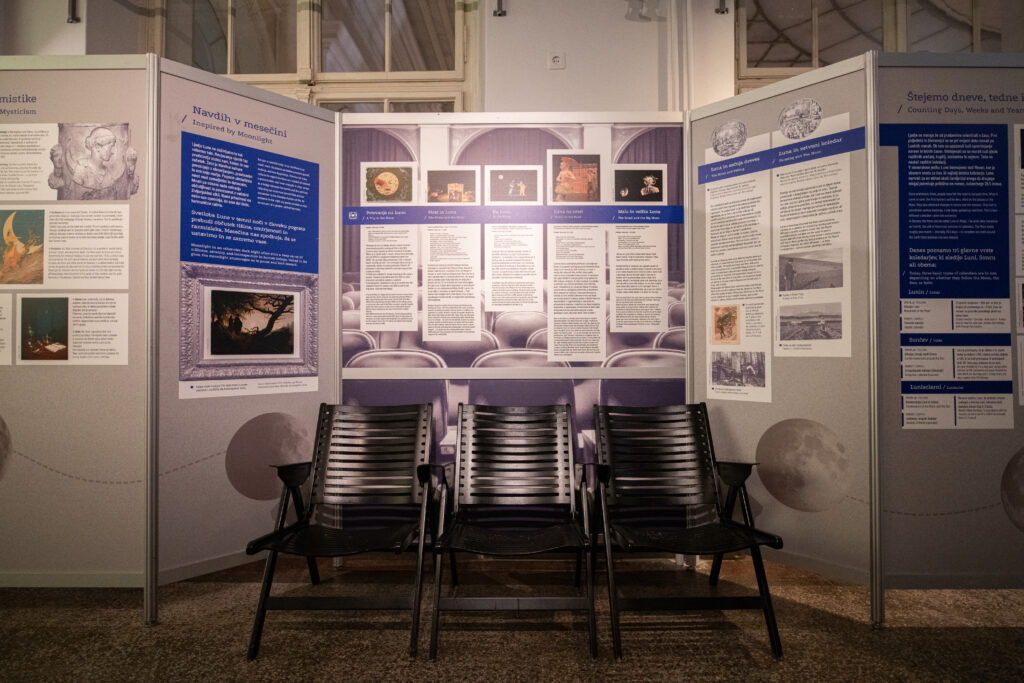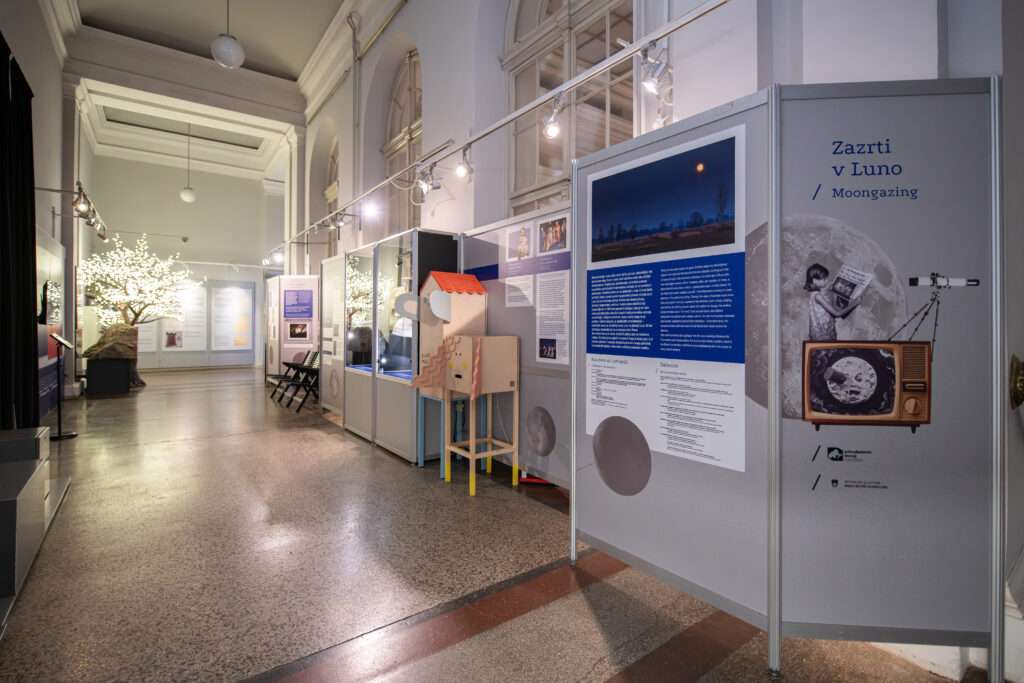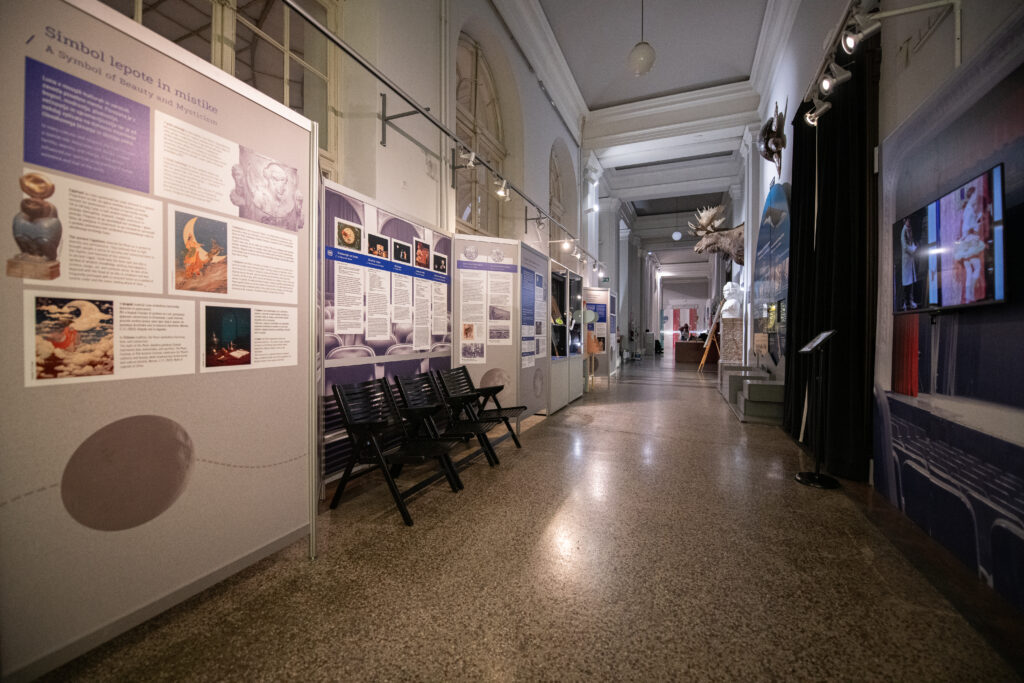


While the new Moon eludes our gaze, the Moon reigns as the brightest object in the night sky through all of its other phases. Looking up in the darkness of night often stirs deep emotions. Its silvery glow fills us with awe; moonlight weaves a veil of romance, calm, and mystery. At times, it seems the full Moon bears a face — gazing down upon us from above. Yet the Moon can awaken sadness, as well — the bittersweet memory of a love gone by, or the quiet echo of loss. Through the ages, it has been much more than just a light in the sky: a symbol of the feminine spirit, of love, longing, and eternity. Its shifting phases reflect the rhythm of change, the endless cycles of nature and of life itself. Since ancient times, this faithful companion has guided myth, religion, and art. Its ever-turning face, renewed each month, inspired humanity’s first calendars — in ancient times, the measure of time itself was bound to the Moon’s slow dance across the heavens.
This exhibition offers but a glimpse into the overwhelming influence the Moon exerts over human culture. For more on our solitary satellite, head to the Blame it on the Moon exhibition in the neighbouring hall and explore its many natural wonders.
Exhibition collaborators:
Exhibition curator: dr. Staša Tome
Authors: Leon Cimerman (Technical Museum of Slovenia), Tjaša Juhart (Museum of Puppetry at the Ljubljana Puppet Theatre), dr. Staša Tome (Slovenian Museum of Natural History)
Photos: archives of Ljubljana Puppet Theatre, Sergei Obraztsov Museum, Moscow, Slovene Ethnographic Museum, Technical Museum of Slovenia and Žiga Kotnik, Nejc Saje, Wikimedia Commons.
Language editor: Irena Duša Draž
Design: Anka Iskra
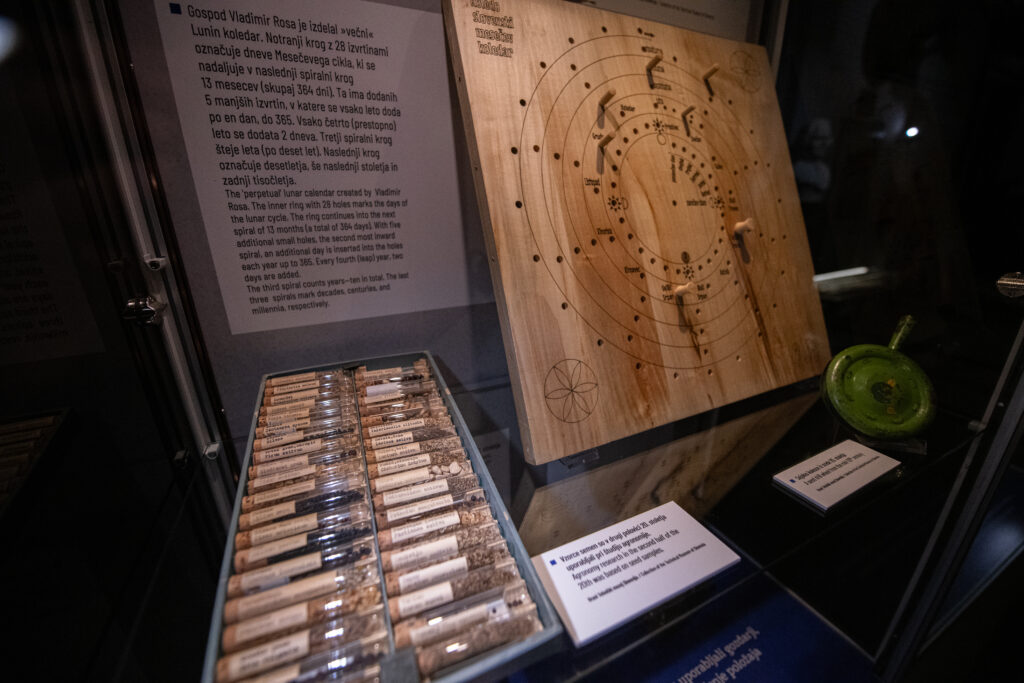
The Perpetual Lunar Calendar produced by: Vladimir Rosa
Video editing: Boštjan Burger
Technical support: Juri Rekelj, Borut Tome
Acknowledgements:
The Slovenian Museum of Natural History would like to express our sincere gratitude to everyone who got smitten by the Moon into collaborating in the making of this exhibition:
Sandra Jenko (Slovenian Theatre Institute) kindly assisted in selecting and acquiring artistic materials, making up for the natural scientists’ lack of expertise in this area. Thank you, Sandra!
Tea Rogelj (Slovenian Theatre Institute) provided interesting visual materials housed by her institution.
Leon Cimerman (Technical Museum of Slovenia) courageously accepted the challenge and shared his knowledge about woodcutting and lunar phases. He also arranged the lease of a few exhibition pieces from his museum’s collections.
MladinskoTheatre, Bufeto Insitute (Nataša and Ravil Sultanov), and Prodok Studio provided video excerpts of the Moon on the Road theatre production.
Society for the Development of Theatre in Education (Tomaž Lapajne Dekleva) kindly accepted the proposed collaboration and granted permission to present a video of the To the Moon! theatre production.
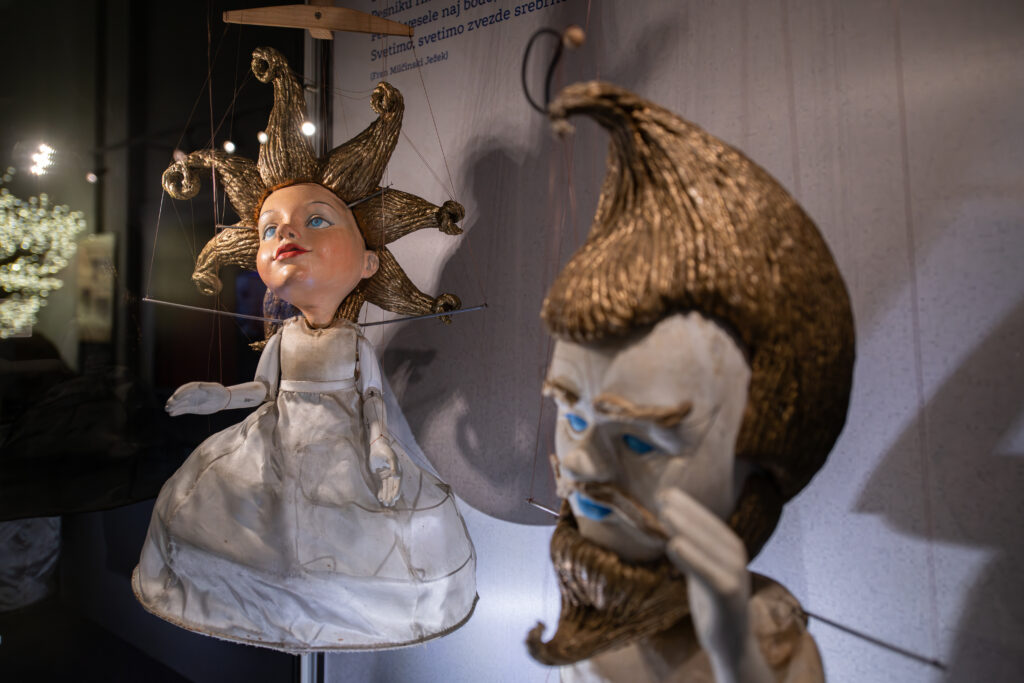
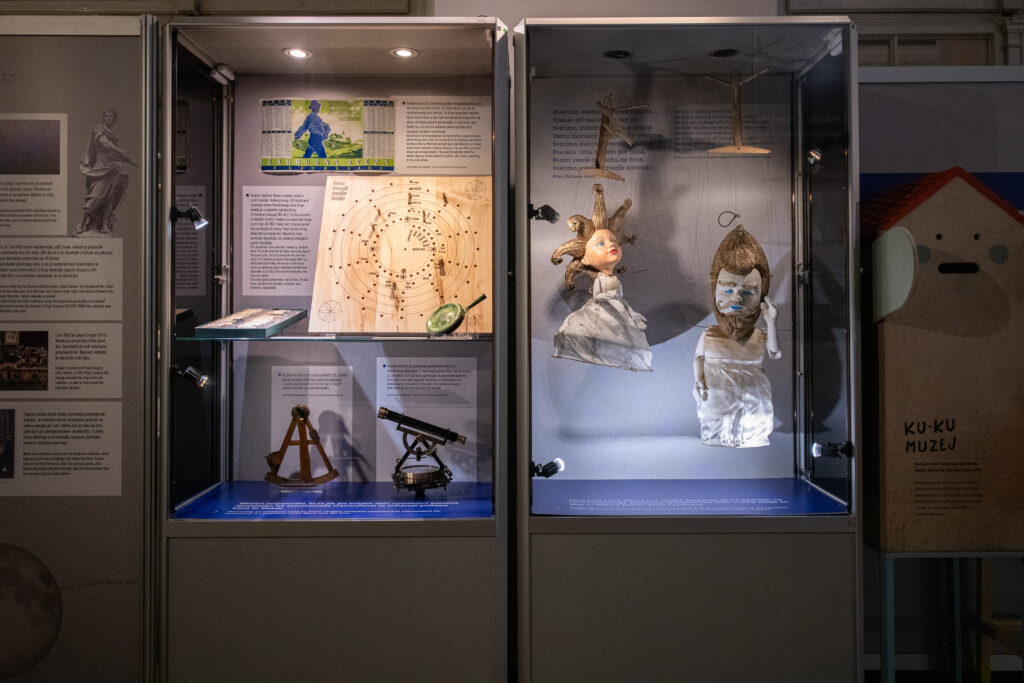
Puppet Museum of the Ljubljana Puppet Theatre (Tjaša Juhart, Zala Kalan) generously leased two wonderful marionettes: the Little Sleepy Star and Godfather Moon and the mobile museum unit Ku-ku museum
Prešeren Theatre Kranj (Eva Belčič) enabled the screening of The Small and the Big Moon theatre production.
Slovenian Film Centre and Slovene Film Archives granted permission to present a video of the puppet show The Little Sleepy Star from 1965